
Request info Apply now

Botswana: University Immersion in Southern Africa

Gaborone, Botswana

Faculty biography - Bill Moseley

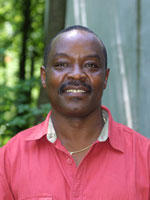
Bill Moseley, professor at Macalester College, is a human-environment and development geographer, as well as an interdisciplinary Africanist scholar.  He has a B.A. from Carleton College in history, a M.P.P. in public policy and a M.S. in natural resources and environment from the University of Michigan, and a Ph.D. in geography from the University of Georgia.  Prof. Moseley has taught in the geography department at Macalester College since 2002, with cross-listed courses in environmental studies, international studies and African studies.  He founded Macalester’s African studies program in 2003.  He is passionate about Africa, field work and development praxis.

Before becoming an academic, Prof. Moseley worked for ten years in international development for such organizations as the Peace Corps, the Save the Children Fund (UK), the World Bank Environment Department, the US Agency for International Development, and the U.S. State Department.  This work and subsequent research led to extended stays in several African countries, including Mali, South Africa, Zimbabwe, Niger, Malawi and Lesotho.  Conference participation and travel led him to visit an additional 11 African countries beyond these six.

Prof. Moseley regularly teaches five courses at Macalester which all relate in one way or another to themes he might deal with in a course in Botswana.  These courses include: Geog 111: Human Geography of Global Issues; Geog/ES 232: People, Agriculture and the Environment; Geog 243: Geography of Africa: Local Resources and Livelihoods in a Global Context; Geog 263: Geography of Development and Underdevelopment; and Geog 488/ES/IS 477: Comparative Environment and Development Studies.  Several of these courses include case studies that deal with Botswana.  For example, in his Africa course students examine Botswana’s somewhat unique program to address HIV/AIDS, which includes a robust treatment program. In his course on People, Agriculture and the Environment, students explore community-based natural resource management programs in southern Africa, including those in Botswana.  In his senior seminar on environment and development, students investigate common property problems and animal husbandry.  Finally, in his development course students read Abdi Samatar’s classic 1999 text An African Miracle: State and Class Leadership and Colonial Legacy in Botswana Development.

Bill Moseley during fieldwork in Mali (West Africa).

The vast majority of Prof. Moseley’s scholarship is Africa-focused.  Over the past nine years, the bulk of his research and writing has dealt with the themes of poverty-environment interactions, food security and hunger monitoring, tropical agriculture, land reform, natural resources management, rural livelihood security, and environment and development policy.  His research has been funded by the National Science Foundation, the US Department of Education Fulbright-Hays Program, and the American Geographical Society.  The product of these efforts has been four edited books (one of which is in its third edition), and over 50 peer-reviewed journal articles and book chapters.  This research features prominently in his teaching.  He served as editor of the African Geographical Review for four years, was a member of a National Academy of Science Commission exploring strategic directions for geography in the coming decade, and sits on the national board of directors of the Association of American Geographers.


Botswana: University Immersion in Southern Africa

Follow us online


Rebekah Bally Studying abroad through the ACM Botswana program was a perfect blend of exciting cultural learning and personal growth. Although the program is centered around the University, I gained many invaluable experiences outside the classroom. Forging friendships with Batswana and ACM students alike, traveling throughout sub-Saharan Africa, volunteering with a Pediatric AIDS clinic, and completing an auto-ethnographic research project all challenged me to become more confident, patient, flexible and understanding. Lessons learned and experiences had in Botswana will forever positively influence my future endeavors.

—Rebekah Bally, Botswana, Spring 2011

Read more testimonials »