
Two long-time members of the ACM community who have been closely involved with consortial activities – Elizabeth Ciner and David Schodt – will serve as Senior Program Officers for Faculty and Staff Development Programs at the ACM office during the 2012-13 academic year.
At Carleton College since 1982, Ciner was associate dean of the college from 1987 until 2010 and a senior lecturer in English. She is currently director of student fellowships. Schodt is a professor of economics at St. Olaf College, where he has taught since 1977 and where he was the founding director of the Center for Innovation in the Liberal Arts (the college’s learning and teaching center) from 2000 to 2011.
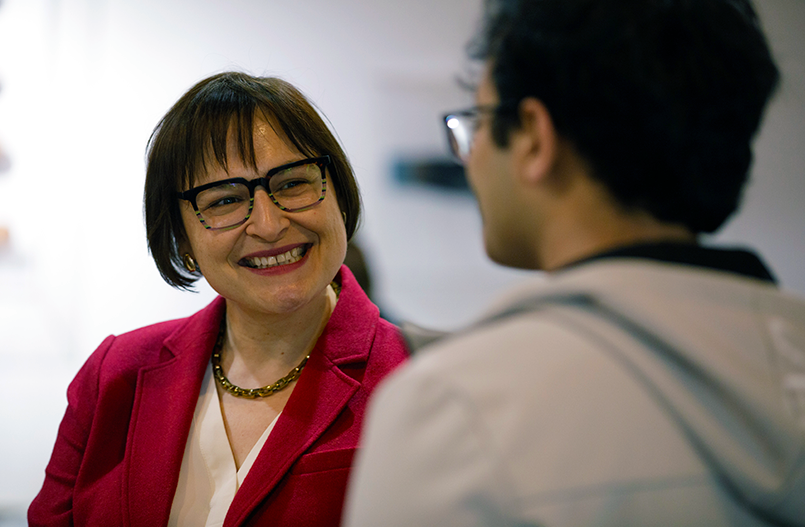
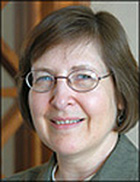 Elizabeth Ciner
“We are very pleased to welcome two such distinguished colleagues to the ACM staff,” said ACM President Christopher Welna. “Given their careers at ACM campuses, as well as their extensive experience with the consortium and deep knowledge of the content and goals of our current faculty development projects, they will bring valuable leadership and insights to our collaborations.”
Ciner and Schodt will each continue with half-time responsibilities at their respective colleges and will devote half time to their ACM positions, beginning in late July. During this interim year, a search committee will work to fill the position on the ACM staff that John Ottenhoff left at the end of June to become Vice President for Academic Affairs and Dean of Faculty at the College of Idaho.
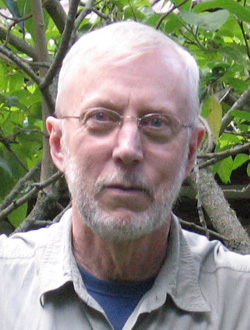 David Schodt
Working with staff and colleagues from the ACM campuses, Schodt will launch a newly-funded Mellon Foundation grant project – Institute on College Futures – as well as carry forward the implementation of two existing Mellon-funded grant projects – the ACM-Mellon Post-Doctoral Fellowship Program and the Seminars in Advanced Interdisciplinary Learning (SAIL).
Ciner, also working with consortial staff and ACM colleagues, will launch two newly-funded grant projects – Enhancing the Midwest Knowledge Ecosystem (EMKE), funded by Mellon, and the Introducing Change project funded by the Teagle Foundation. In addition, both will participate in consortial meetings, including two strategic planning task forces.
Through her participation in meetings of the ACM Advisory Board of Deans, Ciner contributed to the development of ACM programs. She has been deeply involved in the assessment of academic programs and in integrative learning at Carleton. As associate dean, she had oversight responsibility for freshman programs and off-campus study, among other things.
Ciner also has served as principle investigator for the Collaborative Assessment or Liberal Learning (CALL), a four-college consortial grant funded by the Teagle Foundation to explore and evaluate a variety of value-added assessment instruments. She earned her B.A. with honors in English from the University of Pennsylvania and her M.A. and Ph.D. in English from the University of Washington.
At St. Olaf, Schodt served as chair of the Economics Department, director of the Hispanic Studies Program, and project leader for the Carnegie Academy for the Scholarship of Teaching and Learning, Institutional Leadership and Affiliates Program-Liberal Education Group. In addition to his scholarly work on economic policy and political change in Latin America, he has been a consultant for the World Bank, the United States Agency for International Development (USAID), and the ACM, and he has served on the national review committee for the faculty Fulbright Scholar peer review committee.
An award-winning teacher, Schodt has a long-standing interest in student learning, about which he has published and led workshops; he also has served as president of the Active Learning in International Affairs (ALIAS) section of the International Studies Association. He earned his bachelor’s degree in electrical engineering from Cornell University, and an M.A. in public policy and the Ph.D. in economics from the University of Wisconsin-Madison.
Links:
- ACM Faculty Development Projects:
Institute on College Futures
Enhancing the Midwest Knowledge Ecosystem (EMKE)
Introducing Change: Introductory Courses and the Nature of Faculty Work
Post-Doctoral Fellowship Program
Seminars in Advanced Interdisciplinary Learning (SAIL)