

Professors from Macalester College and Coe College have been appointed as Visiting Faculty for the inaugural semester of the new consortial off-campus study program in Jordan and as Visiting Faculty Director for ACM’s long-running program in London.
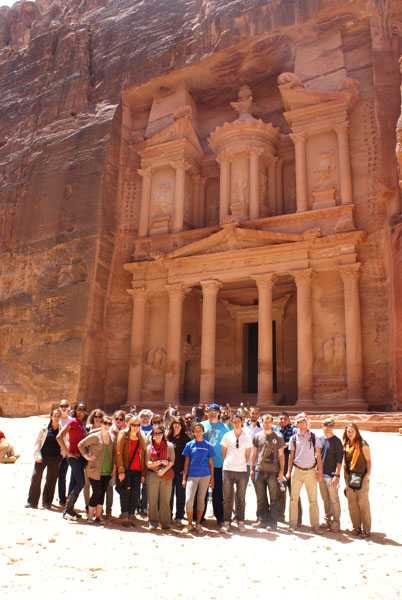 Students on an AMIDEAST excursion to the ancient city of Petra in Jordan.
Macalester sociologist Khaldoun Samman will lead the first group of ACM students in fall 2013 on the Jordan: Middle East and Arabic Language Studies program in the country’s capital city of Amman.
Steven Marc Weiss, a member of Coe’s theatre department, will direct the London portion of the spring 2014 London & Florence: Arts in Context program, in which students explore the rich artistic and cultural resources of two exciting European cities.
Samman will work closely with ACM’s partner in the Jordan program, AMIDEAST, a leading American non-profit organization engaged in international education, training, and development activities in the Middle East and North Africa. He will teach an elective course as part of AMIDEAST’s undergraduate curriculum, guide program participants in their Independent Study Projects, and help mentor the students in their studies and immersive experiences, such as living with Jordanian families.
The program combines language study – both Modern Standard Arabic and conversational Jordanian Arabic – with area studies courses in a wide range of disciplines designed to enhance the students’ knowledge of the Middle East in general and Jordan in particular.
In London, Weiss will teach a course focused on theatre and performance in which students will attend a wide range of plays in venues across the city, from major West End theatres to fringe productions. As the program’s Director, he also will lead the on-site orientation, help students adapt to daily life in their new surroundings, and work with local staff to arrange field trips and excursions to sites in London and the surrounding area.
Khaldoun Samman
Associate Professor Khaldoun Samman is chair of the Sociology Department and coordinates Macalester College’s interdepartmental program in Middle Eastern Studies and Islamic Civilization.
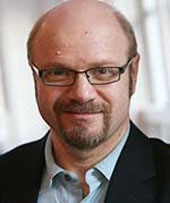 Khaldoun Samman
His scholarly interests cover areas such as Middle Eastern and Islamic history, the religious life and culture of the region, the colonial encounter, the Palestinian-Israeli conflict, the emergence of Arab nationalism and Islamist movements, and gender and social change. Fluent in Arabic and a native of Jordan, Samman has frequently visited Jordan, particularly Amman, for his research.
Samman did his undergraduate studies at George Washington University and received an M.A. and Ph.D. in sociology from Binghamton University (SUNY). During a decade on the Macalester faculty, he has taught courses such as Social Theory, Islam and the West, The Politics of Fear, Secularism and Its Discontents, as well as a range of classes on social problems and social inequalities. He also has supervised numerous student study-abroad projects, most in the Middle East.
He is the author of two books, Clash of Modernities: The Islamist Challenge to Jewish, Turkish and Arab Nationalism (2010) and Cities of God and Nationalism: Mecca, Jerusalem, and Rome as Contested World Cities (2007), and co-editor of book of essays, Islam and the Orientalist World-System (2008).
Steven Marc Weiss
Teacher, director, actor, and theatre musician Steven Marc Weiss is an Associate Professor of Theatre Arts at Coe College.
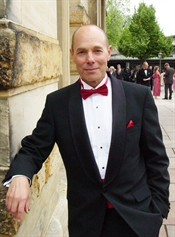 Steven Marc Weiss
He has wide-ranging directorial and acting credits at many regional theatres – from Minnesota to New York to Florida – and at Coe has staged dramas such as Old Times by Harold Pinter and Three Sisters by Anton Chekhov, as well as musicals, including Stephen Sondheim’s Company. As a professional actor, he most recently portrayed painter Mark Rothko in the eastern Iowa premiere of Red, John Logan’s Tony Award-winning play.
Weiss holds theatre degrees from Boston University (BFA, Acting), Binghamton University (SUNY) (M.A., Directing), and The Ohio State University (Ph.D., Acting and Directing Theory). At Coe, he teaches a variety of acting and directing courses and supervises seniors in their advanced projects in acting and directing.
He has led groups of students to study in London three times on Coe May Term courses, and plays a key off-campus study role as Director of Coe’s New York Term, in which students spend the spring semester immersed in the arts in New York City.
Links:
- Jordan: Middle East & Arabic Language Studies
- London & Florence: Arts in Context
- Professor Khaldoun Samman’s bio on the Macalester College website
- Professor Steven Marc Weiss’ bio on the ACM website
- AMIDEAST, ACM’s partner in the Jordan Program