|
|
ACM Tanzania video
Courtesy of Carla Eckland, Grinnell College
|
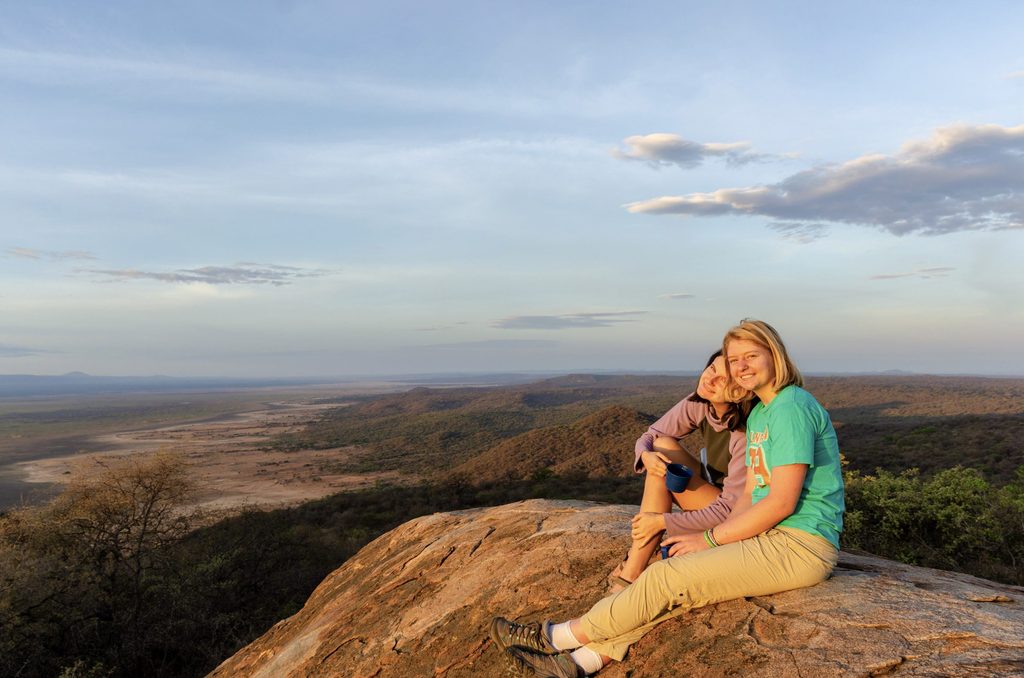
Tanzania boasts some of the most famous ecological and paleoanthropological sites in the world. The grasslands and savannahs of the Serengeti, Ngorongoro Crater, and Tarangire National Park are host to incredible wildlife communities, with elephants, giraffes, lions, and migratory herds of wildebeest, as well as an amazing diversity of primates, birds, and reptiles. These tropical ecosystems are adjacent to the world-heritage sites of Laetoli and Olduvai Gorge, where the Leakeys made their important discoveries of early hominid remains. Add to this the cultural mix of pastoralist Maasai and Datoga tribes, along with the Hadzabe hunter-gatherers, and you have a combination of ecological, anthropological, and cultural resources that is unique to northern Tanzania.
The ACM Tanzania program is designed specifically to take advantage of this unique combination of resources. It is offered each fall semester, and the focus of the program is paleontology, cultural anthropology, and savannah ecology. It combines classroom instruction at the University of Dar es Salaam (UDSM) with extensive field courses and field work in northern Tanzania. At the heart of the program is a field practicum in the natural and social sciences, intended to give students training and first-hand experience with the design, implementation, and reporting of inquiry in the field. In the program director’s research methods course, taught by a visiting faculty member from an ACM college, students are guided in the development of their field practicum projects, studying research design and data-gathering skills appropriate for fieldwork at or near the Tarangire National Park site. Courses in Kiswahili, Human Evolution, and the Ecology of the Maasai Ecosystem, taught by UDSM faculty, provide students with the background and linguistic preparation necessary for their time in the field.
The program is housed on the UDSM campus; during the first five weeks participants live in university residence halls and have access to library, cafeteria, and other UDSM facilities. UDSM faculty also serve as advisors to guide the field practicum in specialized areas of study, helping students develop and refine their proposals for answerable questions and testable hypotheses, test ways to gather and analyze appropriate data and how to evaluate and present findings from the field. During the six-week field practicum, students spend two weeks visiting important field sites in northern Tanzania’s Rift Valley, along with four weeks at a permanent tent camp. From the camp, students plan and implement a schedule with days allocated for gathering data from the field site (typically with assistance from other students), analyzing data, planning follow-up data-gathering, and assisting other students with the collection of data. The practicum is both individual and collaborative in nature, so as to expose each student to a range of questions, hypotheses, types of data, and analysis. For the last four weeks of the program, students live with host families in Dar es Salaam, while they analyze, write up, and present the results of their field practicum and complete the work for their other three courses.
For more detailed information, please use the links located on the left-hand side of this page.
Quick Facts
- Term: Fall semester
- Language prerequisite: None
- Language of instruction: English (plus Kiswahili language class)
- Living arrangements: Dormitory, campsite, & host family
- Who can apply? Students from any college or university
Application deadlines
Fall semester 2013
Final deadline: March 15, 2013
Fall semester 2014
Final deadline: March 15, 2014
If the deadline has passed and you are interested in applying, contact the ACM Office immediately. Late applications may be accepted on a space-available basis.
Find Similar Programs
Themes
Calendar
Features
Program contacts
Emily Gaul
Program Associate
205 W. Wacker Drive, Suite 220
Chicago, IL 60606
Phone: 312.263.5000
egaul@acm.edu
More program contacts »
Publications & Resources
Tanzania program brochure
Tanzania Student Handbook - Fall 2009