


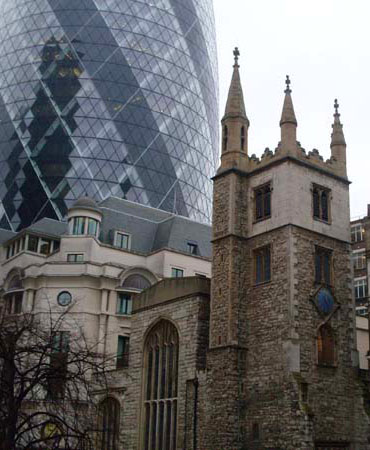
 Old and new are juxtaposed on the streets of London.
Photo by Zachary Clark
What is “sinister London”?
“I’m thinking of the dark corners of London,” said Natania Rosenfeld, an English professor at Knox College. “In Our Mutual Friend, by Dickens, the central family of the novel makes their living by fishing belongings, as well as corpses, out of the River Thames. That just opens a whole door onto the world of petty and illegal dealings of all kinds, or legal dealings that are also sinister or not exactly moral.”
Next spring, “sinister London” will take to the stage alongside “immigrant London” and “hidden London” as motifs in a course Rosenfeld will teach when she’s the London Director of the London & Florence: Arts in Context program.
Using imagination and observation – those of Rosenfeld and her students and those of writers spanning the past five centuries – the course will peel back the layers that time has laid down to explore London’s people, history, and society as seen through the city’s remarkable literary and theatrical traditions.
“Authors have been writing about the Thames since the 15th century,” Rosenfeld noted, as an example. “There’s this very literary idea that you see in a lot of writers, asking: ‘Who was here once before? What did [the Thames] look like when Queen Elizabeth I was on the throne?’ You get that in T.S. Eliot’s The Waste Land.”
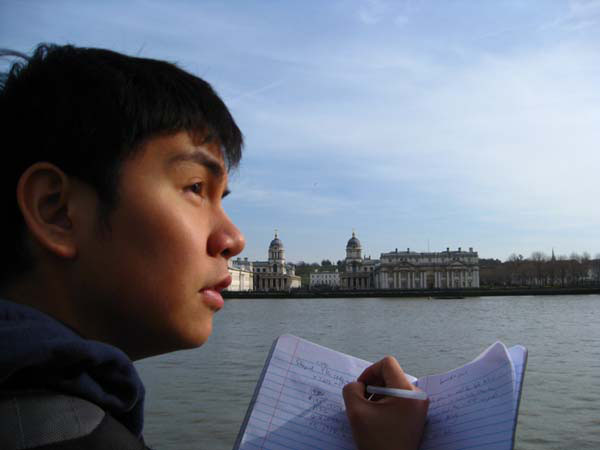 A student takes notes during a class in London.
Photo by Emily Hoffman
During seven weeks in London – students are in Florence the remainder of the semester, with a one-week interlude for travel between the two cities – Rosenfeld and the students will see one or two plays a week, read literature from several of London’s historical periods, and talk to experts and theatre insiders.
They’ll also do a lot of walking between Rosenfeld’s course, “Immigrant, Hidden, and Sinister London: Theatrical and Literary Representations,” and the students’ other class in London, which covers the art and architecture of the city. Both courses rely heavily on field trips to sites and museums throughout London and to Stratford-upon-Avon.
Rosenfeld anticipates spending time in the city’s East End, which has frequently been chronicled in novels and plays over the centuries and is a place where her course’s three main themes often intersect.
“That has always been an immigrant area and it has turned over and over and over – one immigrant community after another – just like the Lower East Side in New York,” said Rosenfeld.
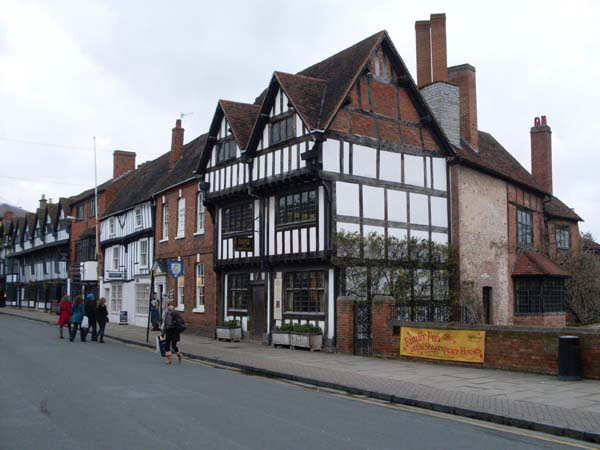 Houses in Stratford-Upon-Avon.
Photo by Zachary Clark
The tiny houses that the French Huguenots lived in are still standing in the East End as a physical remnant of that group’s arrival in the late 17th and early 18th centuries. Successive waves of immigration have brought people to London from the West Indies, from former colonies such as India and Pakistan, and from Eastern Europe and Africa in recent years.
“I want the students to think about the economics of London, what happens in different areas of London, and what’s implicit in the layout of the city and what side of the river you’re on,” she said.
Rosenfeld has lived in London before, accompanying her husband, Knox theatre professor Neil Blackadder, when he directed the ACM program for two semesters. She’s also been to the city to conduct research and attend conferences, and during some of her other travels in Europe.
While she picked up some tips about teaching in London when she occasionally tagged along with Blackadder and his students, Rosenfeld expects that her approach to teaching on the program will be based more on her own experiences as a traveler visiting a place for the first time. “I do a lot of traveling and I like to challenge myself,” she said. “I know you have to work through your bewilderment, and then you can really articulate your discoveries.”
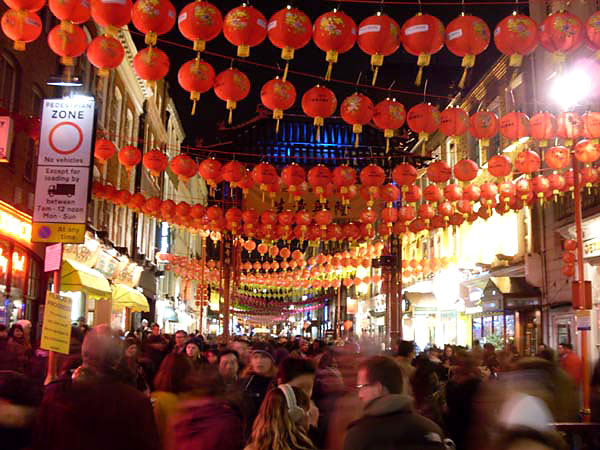
Photo by Zachary Clark
“There’s going to be culture shock [for the students], and there are going to be surprises of all kinds, the way they do things differently [in England] than the way we do them,” said Rosenfeld. “There’s going to be so much that will be bewildering and strange to these students, so I want them first of all to feel that it’s OK – feel bewildered, and we’ll get ourselves gradually to the next stage.”
That next stage for students will be to go beyond what’s in the guidebooks, and to follow their own observations, interests, and imaginations as they learn about and explore – and find the connections between – the London of the past and the London of the present.
“I hope that students think of themselves a little bit as historians and a little bit as archaeologists, albeit amateur, as they walk around London,” Rosenfeld said. “Who was here once? Who is here now that I should notice? What are some of the little places where artistic activity or theatrical activity is happening where you might not expect it to happen?”
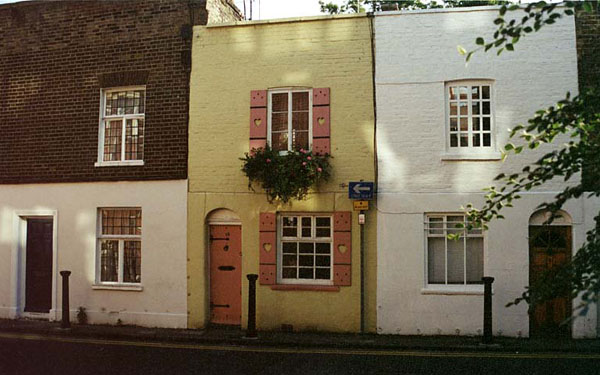 Houses photographed by a student for the course on London as a Visual Text.
Photo by Emily Hewes
The notion of coming upon something unexpected is part of the third motif of Rosenfeld’s course – hidden London, the parts of the city not much written about or portrayed.
“Hidden London would be the millions of people who live their lives, who somehow scrabble for a living, silent and unnoticed,” Rosenfeld said, and she gave an artistic example from one of her previous visits to London.
“I went to the Arcola Theatre and saw a dance production by young people who were autistic or had Down’s syndrome,” Rosenfeld recalled. “I was so moved by the effort that an organization or group of people had made to reach out to these people and show them how to dance and help them discover their natural affinity for dance. It’s things like that that I’m hoping I can encourage students to discover in London.”
Travel, Discoveries, and Writing Come Together in London |
||||||
| Along with a variety of literature courses, Rosenfeld teaches a course at Knox on creative non-fiction – the personal essay – in which students reflect on their experiences, their enthusiasms, and their passions in life.
“A lot of personal non-fiction writing is about travel,” she noted. “What did I experience when I went to this place? How did it make me feel that I was a different person from who I thought I was, or who I am at home? I imagine seeing students going through a lot of those thoughts [in London], and maybe I would encourage them to write about it.”
Rosenfeld is an active – and widely-published – writer, whose works range across fiction, essays, and poetry to academic articles and a book about writer Virginia Woolf and her husband Leonard Woolf.
Not surprisingly, her enthusiasm for travel emerges in her writing. “My poems tend to be about my sensitivity to the different kind of vibes in a given place and how I fit into all of this,” she noted. “What’s my part in all of this? Or am I just a tourist?”
In 2010 she published a poem about her first days in an apartment on Euston Road, where she and Blackadder stayed the last time they were in London. The apartment was near a Tube stop and upstairs from a record store, Sterns, that specialized in African music.
“You could walk into Sterns and see African émigrés on headphones listening to all the CDs,” she said. “They had their own café and served African soups, and it was the place to go for world music.” |
“The poem, ‘Arrival in London,’ is about being in that apartment,” she continued, “being aware of the people downstairs, being aware of African music, being aware of the subway even further down, and also remembering the news story from several years ago about the whale that washed up the Thames.”
Next spring, Rosenfeld will live in that same apartment again, enjoying the lively neighborhood, missing the now-closed record store, and, she said, writing more poems about London. |
|||||
Arrival in London
I wallow in the tub,
Last year, a whale lost
In the African music shop
I sink; the water covers
The water drains, workers
– Natania Rosenfeld |
||||||
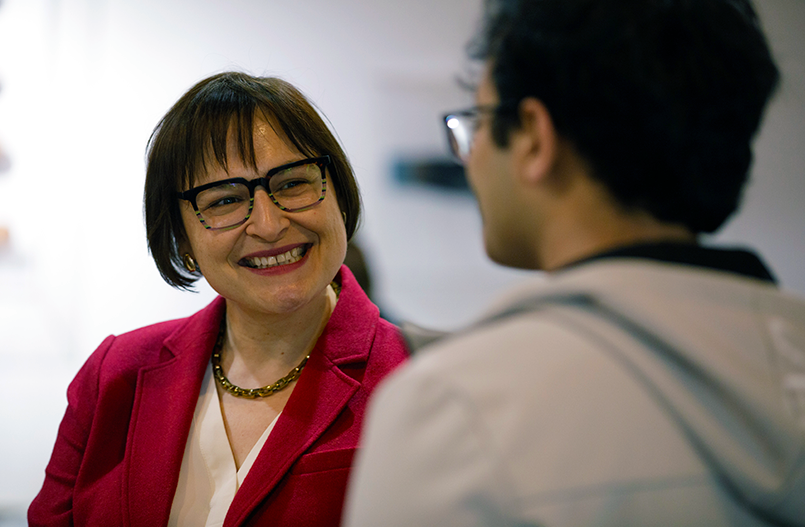
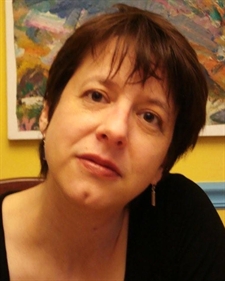 Natania Rosenfeld
Links:
- London & Florence: Arts in Context
- Natania Rosenfeld’s bios on the ACM website and on the Knox College website
- Courses in London